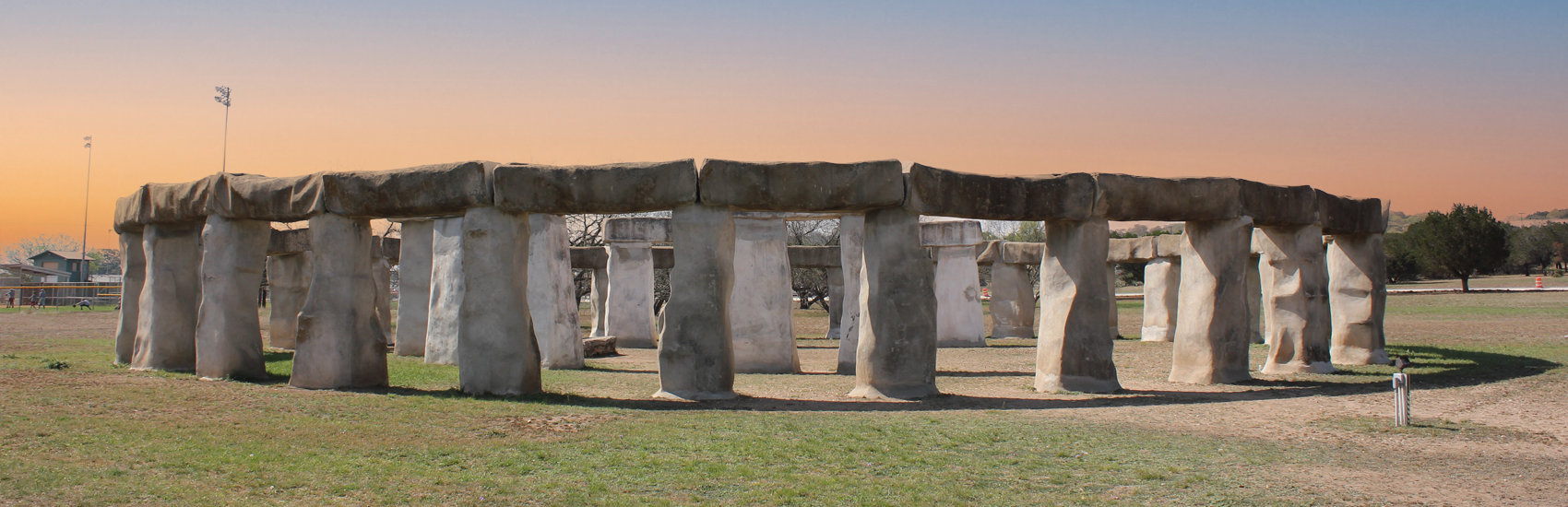
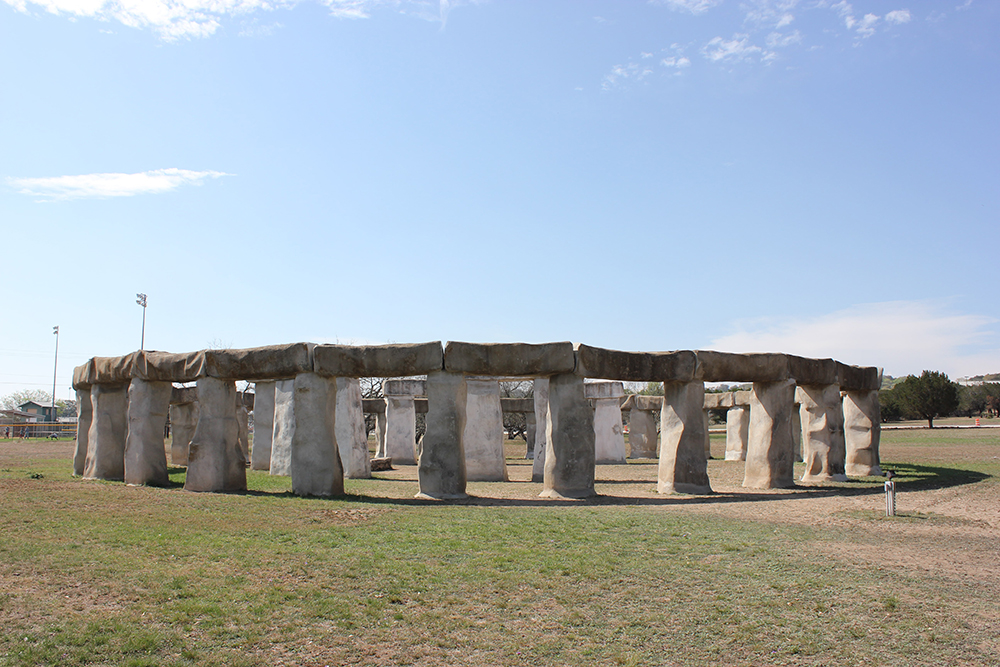
Nestled alongside the Guadalupe River halfway between Kerrville and Hunt lies the town of Ingram. This community of about 1,800 people is almost a combo of several towns in its vicinity, in that it’s taken advantage of local resources and has capitalized on them to make it a prime example of a Hill Country town. You’ll find farming and ranching in Ingram, wineries that take advantage of the unique local terroir, attractions linked to recreation on the river, and even a model of Stonehenge!
Let’s take a look at Ingram’s history. At the dawn of human presence in the area, it was recognized as a good spot to live by ancient Native Americans, thanks to its proximity to a reliable source of fresh water and healthy soil. The first white settlers here date back to 1847, when San Antonio banker and philanthropist John Twohig granted the land to the state for settlement.
The first settlers here were farmers and ranchers, a trait Ingram has in common with much of the Hill Country. While a collection of homes and farmsteads grew, there was no official organization between Kerrville and Hunt for over 30 years.
We need to pause here for a note. We do our best to be accurate with historical facts, and to fact-check at least two reliable sources before putting a name or date in our essays. For example, here we’ve drawn info from the Texas State Historical Association, the official website for the city of Ingram, the Historical Marker Database, the Handbook of Texas Online, and other sources. In Ingram’s case we’ve found an intriguing source that clashes with some information from our other sources.
We know Methodist minister J.C.W. Ingram established a post office and general store here. Most sources place this in 1879; however, in 2015 a direct descendant of Ingram’s posted official documents and family histories that claim Ingram didn’t move from California to the Hill Country any earlier than 1881, and that official postal records show he became Ingram’s postmaster in October of 1882. We have confidence the accurate history falls somewhere in that three-year gap of discrepancy.
The following four decades or so brought steady growth to Ingram, now firmly established as another fine ranching and farming community. It’s estimated the town’s population crested the 1,000-person mark during the comparatively prosperous period just after World War II.
The early 1930s brought a shakeup to Ingram. It was two-pronged; one source was natural, and the other man-made. In 1932, there was a major flood that damaged many of the businesses and homes in the town’s center, and around the same time the local highway (today’s Texas Highway 27) was slightly re-routed. Both negative factors put Ingram at a disadvantage, and many residents and business owners downtown moved half a mile northeast for higher ground and better highway access.
When this rebuilding took place, a drugstore owner by the name of J.J. Maxwell made his new building out of flagstone. Others soon followed suit, which gave the new business district a distinct look. From this building trend, Ingram was given the nickname of “Rock Town.” Though it’s not used as commonly now, you’ll still hear the moniker on occasion.
Speaking of rock, one the most unique attractions in Ingram today is Stonehenge II. It’s exactly as it sounds, a replica of the megalithic structure in southern England. It all started as a friendly joke between neighbors when Doug Hill gave a leftover limestone slab to his friend Al Sheppard. It wound up propped upright in Sheppard’s field, and as one thing led to another, it wound up being a two-thirds size replica of Stonehenge nine moths later. All this happened in Hunt, but when Sheppard passed away in 1994, Stonehenge II (along with two replica Easter Island Moai statues) was moved to its current location in Ingram.
There’s a LOT to do in and around Ingram, from tubing on the Guadalupe to taking in the mystic vibes of Stonehenge II, and we’ve got the tool to help you navigate during your travels! We’ve researched businesses and attractions in this awesome town, and that info is ready for you at the bottom of this page in listings sorted by category. All the shops, parks, restaurants, and kid-friendly spots in and around Ingram are just a click or two away. It’s a perfect road map for your visit!
If you're planning a Hill Country trip and want to go deeper than this article — finding the right small towns, lining up a route, picking lodging that fits how you actually like to travel — we've built a few places that can help.
The Hill Country App covers 40+ towns and 3,000+ local businesses across wineries, swimming holes, restaurants, lodging, and events. Easy to use on the road, useful for planning before you leave.
For something more personalized — recommendations tailored to your timing, your interests, and the kind of trip you want — explore the Hill Country for routes, picks, and trip ideas built around what you're actually looking for.
And if you want to swap stories, hidden gems, and local recommendations with people who know the area, join our Texas Hill Country Facebook Group — that's where the conversation happens.
Explore the Hill Country
The Backroads Hill Country Travel App

Antiques

Restaurants

Bars

Kid Friendly

Wineries

Gifts

Parks